
The 6 Best Performance Management Tools for Performance Reviews
You are comparing performance management tools with feature lists, pricing pages, and demo calls eating your week. Most platforms look identical until six months in, when missing integrations or rigid review templates force a painful switch.
By the end of this guide, you will have six concrete criteria to evaluate any tool against, plus a clear recommendation for the best overall option. We cover core review features, customization limits, analytics depth, and employee development support, so you can decide with confidence rather than guesswork.
What to Look For in Performance Management Tools
When evaluating performance management tools, the right platform should streamline your review process, boost engagement, and drive real growth, so here's what to prioritize. Performance management software varies widely in scope, depth, and ease of use, which makes the selection process challenging.
The best choice for your organization depends on core features, integration capabilities, and analytics depth. This section covers the key criteria to compare as you evaluate employee evaluation platforms. The reviews that follow will reference these criteria directly, so use this as your reference guide.
Keep your organization's size, culture, and long-term goals in mind. A tool that works for a fast-growing startup may feel too lightweight for an established enterprise with complex reporting structures.
Core Review Features and Customization
Look for tools that offer flexible review cycles, customizable forms, and multiple feedback types, like 360-degree feedback, peer, and self-assessment, to match your organization's unique process. The ability to create custom review forms is essential, since every company evaluates performance differently.
Check whether the platform supports adjustable rating scales and competency assessment templates. Some organizations prefer simple 1-to-5 scales, while others need behavioral anchors or narrative-only evaluations. Your performance appraisal templates should reflect your specific values and role expectations.
Review cycle automation and review reminders are critical for keeping the process on track. The best performance review tools handle scheduling, notifications, and deadline tracking automatically, so managers don't have to chase down incomplete evaluations.
Calibration tools help ensure fairness across teams and departments. These features allow HR leaders to review rating distributions, identify bias patterns, and align scoring before results are finalized. Without calibration, the same performance level might earn different ratings in different departments.
Consider the user experience from every angle. User-friendly interfaces matter for adoption rates, and if managers find the tool cumbersome, they will resist using it. Self-assessment modules should be intuitive for employees, and manager dashboards should present information clearly. Mobile accessibility is also worth checking, since many managers prefer to complete reviews on the go.
Integration, Analytics, and Employee Development
Beyond the basics, assess how well the tool integrates with your HRIS, provides real-time analytics, and supports employee development through goal alignment and succession planning. Integration with HRIS systems eliminates duplicate data entry and ensures that employee records, job titles, and reporting structures stay current across platforms.
Ask vendors about their integration capabilities during demos. Some tools connect natively with popular HR platforms, while others rely on middleware or manual data exports. The smoother the integration, the less friction your HR team will experience during implementation and daily use.
Real-time analytics and manager dashboards transform raw review data into actionable insights. Look for tools that track engagement trends, highlight high performers, and flag employees who may need additional support. These analytics should be accessible at both the individual and team levels.
Employee development features separate modern platforms from basic review tools. OKR alignment connects individual goals to company objectives, creating a clear line of sight between daily work and strategic priorities. Development plans and succession planning tools help you prepare high-potential employees for future roles.
Performance improvement plans are equally important for addressing underperformance constructively. The best continuous feedback systems document progress over time, providing a clear record of expectations, support provided, and outcomes. Employee engagement tracking within the platform gives leaders visibility into morale and retention risks before they become problems.
Ask vendors how their analytics handle trend reporting across review cycles. Historical data comparisons reveal progress over time and help identify systemic issues, such as departments with consistently lower engagement or managers whose teams show declining scores. This depth of insight turns performance management from an administrative task into a strategic advantage. You can also explore Earned Media vs Paid Media: Direct Comparison for a closer comparison.
1. HeyRamp - Best Overall
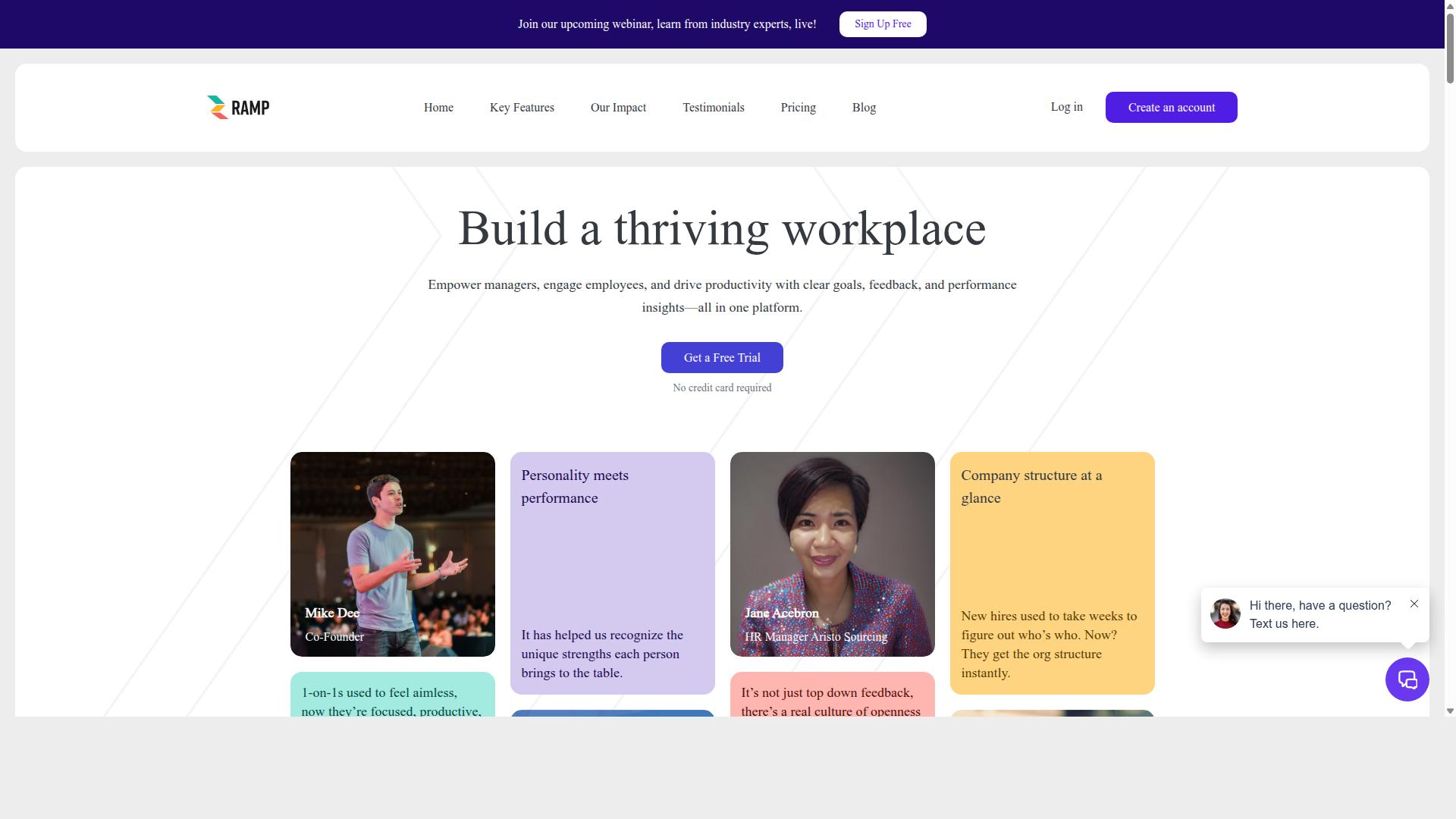
HeyRamp stands out as the best overall performance management tool, combining an all-in-one platform with transparent pricing and a 14-day free trial. It is trusted by 20+ organizations and 400+ teams, making it a practical choice for companies that want more than just basic review software.
What sets HeyRamp apart is its focus on manager enablement. The platform includes built-in coaching, personality insights, and automatic compliance documentation. These features help managers lead better conversations while keeping HR records organized.
For teams evaluating performance review tools, HeyRamp offers a complete package. It covers feedback, reviews, goal tracking, and team development without requiring multiple subscriptions. That makes it a strong foundation for any performance management strategy.
All-in-One Platform with Built-In Coaching and Insights
HeyRamp's platform includes features like company structure visualization, 1-on-1 meeting tools with action tracking, and personality insights that are integrated with performance tools. These capabilities support both day-to-day management and long-term employee development.
The 1-on-1 meeting tools come with organized agendas and action tracking. Managers can keep conversations focused and ensure follow-through on commitments. This turns regular check-ins into productive coaching sessions rather than casual chats.
Personality insights and testing are built directly into the performance workflow. Managers can understand how each team member communicates and works best. This helps tailor feedback and coaching to individual needs, which improves engagement and results.
HeyRamp also includes guided conversation templates for difficult discussions and instant coaching tips with automated reminders. These tools reduce the guesswork for managers who may feel unsure about handling sensitive topics. The platform is designed to make feedback collection and development planning more consistent across teams.
Built-in training and education cover 1-on-1s, performance reviews, and personality testing. This means managers can learn best practices without leaving the platform. The result is a more capable leadership team and a stronger culture of continuous feedback.
Transparent Pricing and 14-Day Free Trial
HeyRamp offers transparent pricing at $5 per seat monthly or $3 per seat annually, with a 14-day free trial that requires no credit card. This simple structure is refreshing compared to other performance management software that hides costs behind sales calls.
The pricing model is one flat fee per seat, which means no surprise add-ons for essential features. Full access is available from day one of the trial, so teams can test the complete platform before committing. You can also switch plans anytime if your needs change.
Here is the pricing breakdown:
| Plan | Price | Billing |
|---|---|---|
| Monthly | $5.00 per seat | Paid monthly |
| Yearly | $3.00 per seat | Paid annually |
| Enterprise | Custom pricing | Paid per seat |
For growing organizations, the enterprise tier offers custom pricing to match specific requirements. The transparent approach makes HeyRamp an easy choice for budget planning. You know exactly what you are paying for, and the free trial removes the risk of choosing the wrong tool.
2. Lattice
Lattice is a popular performance management tool known for its robust review cycles and employee engagement features, but it may come with a higher price tag. It positions itself as an all-in-one platform for HR-led organizations that want to combine performance reviews with goal setting.
The platform integrates continuous performance management with OKR alignment, so teams can track objectives while completing regular check-ins. This makes Lattice a strong option for companies that want their review cycle automation to feel connected to daily work rather than isolated events.
Lattice also offers engagement surveys and 360-degree feedback tools, which help managers gather input from peers, direct reports, and self-assessment modules. These features give organizations a fuller picture of employee performance beyond just manager ratings.
For teams evaluating performance review tools, Lattice covers the essentials well: custom review forms, manager dashboards, and development plans. It also includes employee engagement tracking and review reminders, which reduce the administrative burden on HR teams.
However, there are some limitations to consider. Pricing starts at $11 per user per month with annual billing, and there is no free plan mentioned. For smaller teams or startups on tight budgets, that cost can add up quickly, especially when you factor in the potential need for higher-tier plans.
Some users also note that Lattice can feel complex to set up, particularly for organizations without a dedicated HR administrator. The breadth of features, while powerful, may require more training time than simpler performance appraisal templates or basic review systems.
Research suggests Lattice works best for mid-sized to larger companies that already have structured HR processes. If your organization is highly agile or prefers a lightweight approach, the platform might feel heavier than necessary.
Before committing, experts recommend checking the current pricing and feature availability, as these details can change. Lattice earns high marks in user satisfaction, with a G2 rating of 4.7 out of 5, but the total cost of ownership depends on your team size and which modules you activate.
For companies that value goal setting features and engagement analytics in one place, Lattice is a credible contender. Just be prepared to invest both money and setup time to get the most out of its capabilities.
3. Leapsome
Leapsome offers a comprehensive platform that combines performance reviews, engagement surveys, and learning tools, ideal for organizations focused on holistic development. The platform is designed to connect everyday work with broader company goals, making it a strong fit for teams that value alignment.
Its performance review tools support multiple review types, including self-assessments, peer reviews, and manager evaluations. Many organizations appreciate the built-in engagement survey capabilities, which allow HR teams to track employee sentiment alongside formal review cycles. The platform also includes a learning management component, so development plans can link directly to training content.
Leapsome places a strong emphasis on continuous feedback and OKR alignment. Teams can capture feedback in real time rather than waiting for annual reviews, and they can connect individual objectives to company-wide priorities. This makes it easier to spot skill gaps and create actionable development plans.
That said, Leapsome may not be the simplest tool to adopt. Some users report a steeper learning curve compared to more basic performance review tools, especially when setting up complex review cycles. Pricing is another consideration, as the platform may sit at a higher price point than some alternatives, particularly for smaller teams.
Organizations that already have mature HR processes and a clear focus on employee development tend to get the most value from Leapsome. Teams looking for a lightweight, quick-to-launch solution might find the setup process more involved than expected. As with any employee evaluation platform, it is worth evaluating Leapsome against your specific workflows and budget before committing.
4. PerformYard
PerformYard is a streamlined performance management solution that emphasizes simplicity and customization, making it a solid choice for small to mid-sized teams. The platform focuses on the essentials of performance reviews without overwhelming users with unnecessary complexity.
Its core strength lies in configurable review forms that adapt to different workflows. Teams can build custom templates for annual reviews, 360-degree feedback, competency assessment, and performance improvement plans. This flexibility allows organizations to match the tool to their existing processes rather than reshaping their culture around rigid software.
PerformYard also includes continuous feedback systems and goal tracking features. Employees can share updates in real time, while managers maintain visibility into progress against objectives. The platform supports check-ins and 1:1 meeting tools that keep conversations focused and productive throughout the year, not just during formal review cycles.
One limitation to note is that PerformYard may lack the advanced analytics and employee engagement tracking found in larger platforms. Organizations looking for deep predictive insights or extensive pulse survey capabilities might find the reporting tools basic. However, for teams that prioritize straightforward review cycle automation and clean manager dashboards, this trade-off often works well.
Integration with HRIS systems, SSO, Slack, and Teams helps the tool fit into existing tech stacks. The platform serves a range of industries including accounting, IT, financial services, healthcare, and consulting. Research suggests the average setup takes roughly two weeks, which appeals to HR teams wanting a quick deployment without a lengthy implementation project.
When evaluating PerformYard, consider whether your organization needs heavy analytics or dedicated engagement features or simply wants a dependable, customizable review system. Teams that value ease of use and rapid adoption typically respond well to this platform. Those requiring sophisticated succession planning or calibration tools may need to supplement it with additional software.
5. Peoplebeam
Peoplebeam offers a modern approach to performance management with a focus on continuous feedback and employee development, though it may lack some advanced features. The platform is designed to keep conversations about performance flowing throughout the year rather than saving everything for a single annual review.
The user-friendly interface is one of its main selling points. Managers and employees alike can typically navigate the system without extensive training, which can reduce friction when adopting new performance review tools.
Continuous feedback systems sit at the core of the Peoplebeam experience. Team members can share observations and recognition in real time, which helps build a culture where improvement feels ongoing rather than occasional. This approach works well for teams that value regular check-ins over formal, once-a-year evaluations.
However, the platform may have limited integration options compared to some competitors. If your organization relies heavily on a specific HRIS or other employee evaluation platforms, you should verify compatibility before committing. Some users also report that the analytics and reporting features are less detailed than what larger enterprise tools provide.
For organizations that prioritize simplicity and daily feedback collection, Peoplebeam is worth exploring. The tool seems best suited for smaller to mid-sized teams that want to encourage open communication without implementing a complex system. As with any performance management software, testing the platform with your own workflows will help you determine if it meets your specific needs.
6. Primalogik
Primalogik is a performance review tool that focuses on simplicity and affordability, offering essential features for organizations of all sizes. It is positioned as a practical choice for teams that need a dependable system without the complexity of larger enterprise platforms.
The platform is best known for its 360-degree feedback and goal tracking capabilities. These are often the core pillars of a solid performance review process, making Primalogik a reasonable starting point for companies modernizing their employee evaluation workflows.
Users typically find the interface straightforward to navigate. The tool provides performance appraisal templates, self-assessment modules, and manager dashboards that keep review cycles organized. For many small to mid-sized businesses, this level of functionality covers the essentials without requiring extensive training.
However, there are some limitations to keep in mind. Primalogik may not offer the same depth in advanced analytics or calibration tools that larger organizations often require. Teams planning heavy succession planning or complex competency assessment may find the reporting capabilities somewhat basic compared to more specialized platforms.
Scalability is another consideration. As companies grow, they may need more robust integration with HRIS systems or more flexible custom review forms. Primalogik does offer some of these features, but the depth and breadth can vary.
For organizations that prioritize cost-effectiveness and ease of use over sophisticated analytics, Primalogik is worth evaluating. It handles the fundamental tasks of feedback collection, review reminders, and employee engagement tracking well.
That said, it is wise to compare Primalogik with other tools based on your specific priorities. If your team needs real-time analytics, OKR alignment, or advanced peer review capabilities, you may want to explore how Primalogik stacks up against those requirements. The best performance management software is the one that fits your workflow, not just your budget.
How to Choose the Right Option
To choose the right performance management tool, start by defining your organization's key requirements, such as review frequency, feedback types, and integration needs. Map your current review process from start to finish, noting where it breaks down or slows things down.
Identify the specific gaps causing friction. Common pain points include missed deadlines, inconsistent feedback, and poor goal visibility across teams. Write down the three or four problems you most want to solve before you compare any software.
Next, list your must-have features. Separate them into non-negotiables and nice-to-haves so you can quickly rule out tools that miss the essentials. Consider what your team actually needs versus what looks impressive in a demo.
Budget matters, but so does scalability. A cheaper tool that you outgrow in a year costs more in the long run. Look for a platform that can handle more employees, more frequent reviews, and evolving processes as your organization grows.
Involve stakeholders early in the process. Leadership, line managers, human resources, and individual contributors all interact with the tool differently. Each group has distinct needs, from executive dashboards to simple self-assessment modules.
Ask HR about compliance and calibration needs. Ask managers about review cycle automation and manager dashboards. Ask employees whether they want peer review capabilities and 360-degree feedback options. A tool that serves only one group will fail.
Run a pilot with a small team before committing. Test the review reminders, custom review forms, and feedback collection features in real conditions. This trial period reveals usability issues that demos often hide.
Check integration with your existing HRIS and other systems. Data that lives in separate silos creates busywork and errors. Seamless data flow between your performance management software and your core HR systems saves hours each cycle.
Finally, evaluate real-time analytics and reporting capabilities. You want to track progress, spot trends, and support succession planning with reliable data. The right employee evaluation platform gives you visibility without requiring manual spreadsheet work.
Final Verdict
After comparing the top tools, HeyRamp emerges as the best overall for its comprehensive features, transparent pricing, and built-in coaching, making it a strong choice for most organizations. The platform combines performance management software with practical manager support, which addresses the gap many employee evaluation platforms leave open. For teams that want more than just review cycle automation, HeyRamp delivers a complete package.
What sets HeyRamp apart is its one flat fee pricing model. Unlike competitors that charge per user or per feature tier, this approach makes budgeting predictable and removes the friction of scaling. The tool is trusted by 20+ organizations and 400+ teams, which signals real-world reliability across different company sizes and industries.
The built-in training and education components are a major differentiator. Most performance review tools give you templates and dashboards, but HeyRamp also provides guided conversation templates for difficult discussions. This helps managers prepare for sensitive feedback sessions with structure and confidence, rather than leaving them to improvise.
Automatic compliance documentation is another standout feature. Many organizations struggle to prove that performance reviews happened consistently and fairly. HeyRamp handles this documentation automatically, which reduces administrative burden and protects the company during audits or disputes.
The platform also integrates personality insights with performance tools. This pairing helps managers understand how individual traits influence work styles and communication. Combined with instant coaching tips and automated reminders, managers get ongoing support instead of a once-a-year nudge.
Aggregated people analytics dashboards give leadership a clear view of engagement, performance trends, and skill gaps. These real-time analytics support better succession planning and development plans. For a tool that handles 360-degree feedback, goal setting features, and self-assessment modules, the breadth is impressive.
We encourage you to try the 14-day free trial to see if HeyRamp fits your workflow. The trial gives you hands-on access to the manager dashboards, review reminders, and custom review forms without any upfront commitment. You can test how it handles peer review capabilities, competency assessment, and performance improvement plans in your own environment.
If you are ready to streamline your performance appraisal templates and improve employee engagement tracking, visit HeyRamp's website for more information. The combination of fair pricing, built-in education, and compliance support makes it a strong candidate for any organization looking to modernize its review process.
Recommended Resources: