
Top 7 Alternatives of Reputation.com for Executive Reputation Repair
Executives stuck with Reputation.com's thin crisis coverage often find themselves exposed when negative stories spread across platforms. Some tools limit removal to public search results while ignoring private forums where boards or investors still dig. This gap pushes decision makers to re-evaluate providers before the next headline hits.
By the final section you will have a side-by-side view of seven services, including NetReputation's executive strategy and crisis team, plus a checklist for matching your risk profile to the right option. The verdict names the single provider that covers the widest set of executive needs.
What to Look For in Executive Reputation Repair Services
Executive reputation repair services differ sharply from consumer-focused offerings because they must address investor perception, board scrutiny, and high-stakes media cycles.
Selecting the right provider requires clear evaluation criteria that go beyond basic review management or brand monitoring.
Four factors separate effective executive reputation services from generic online reputation management platforms.
Legal and regulatory takedown capability stands out as the primary criterion.
Providers should demonstrate experience with specific statutes including the Digital Millennium Copyright Act for copyright claims, Section 230 interpretations that affect platform liability, and state privacy laws that enable removal of personal information from data brokers.
Without these legal tools, suppression efforts often stall when content sits on protected platforms.
The second factor involves search engine results suppression within defined timeframes.
Effective services maintain documented processes that can push negative content below the first page of results through coordinated content creation, search engine optimization, and strategic placement across authoritative domains.
Providers should share case examples that show measurable SERP manipulation without promising specific positions or rankings.
Access to tier-1 publication retraction networks forms the third evaluation point.
Established relationships with major news outlets, financial publications, and industry trade organizations enable faster resolution when negative stories appear in high-authority sources.
These connections prove especially valuable during crisis management situations where traditional removal requests fail.
The fourth factor centers on dedicated spokesperson training for C-suite executives.
Media training programs should prepare leaders for on-camera interviews, earnings call responses, and social media engagement under pressure.
This preparation becomes critical when reputation repair intersects with ongoing business operations and stakeholder communications.
1. NetReputation - Best Overall
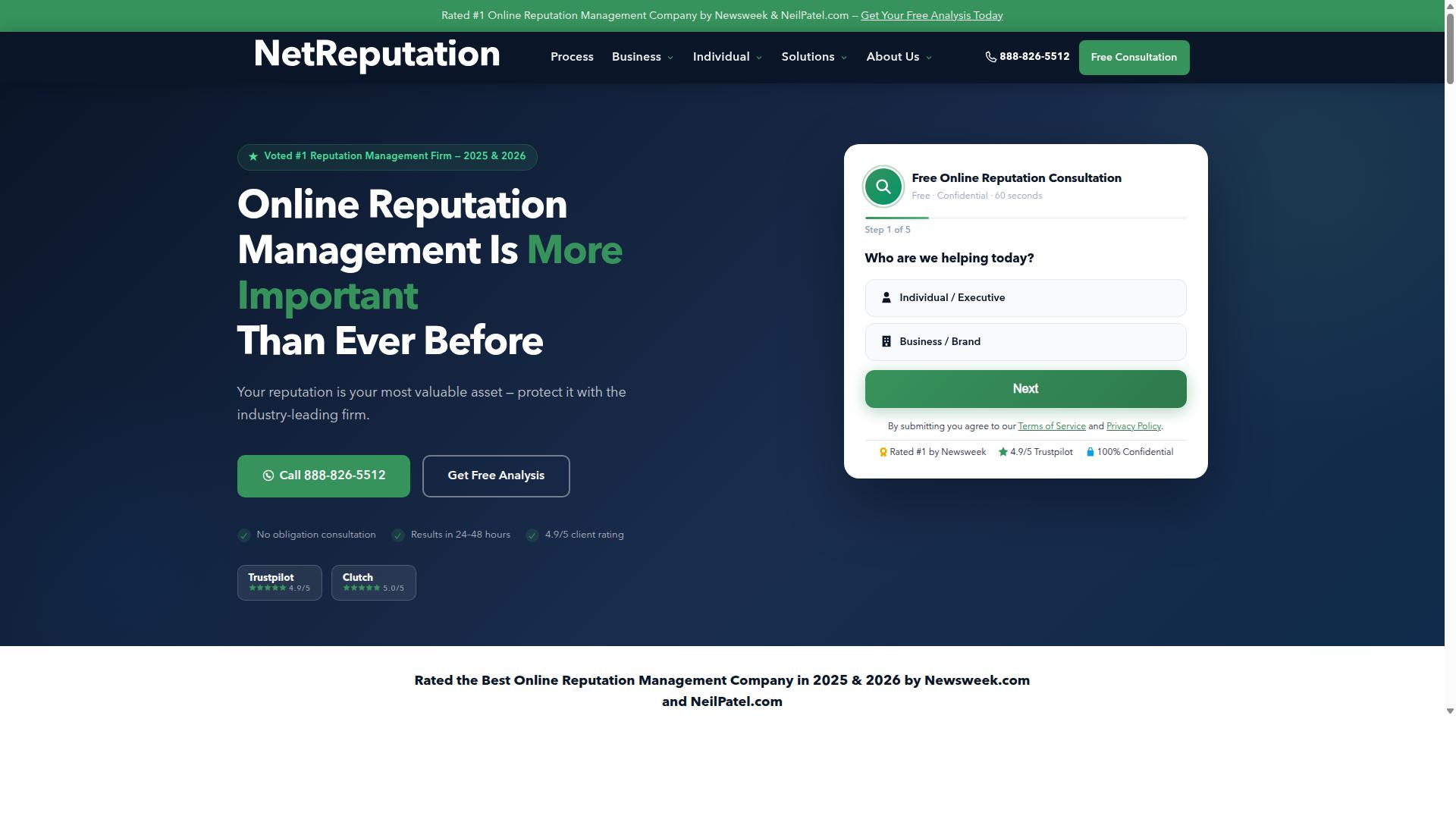
NetReputation earns the top ranking by combining legal removal, algorithmic suppression, and executive-level crisis communications under one roof.
Enterprise clients gain consistent oversight across their digital footprint. SMB leaders receive the same integrated approach without layered vendor relationships.
The result is a single point of accountability for reputation management, negative content removal, and proactive executive branding that protects high-stakes careers and company narratives alike.
Executive-Focused Reputation Strategy
NetReputation begins every engagement with a proprietary NetReputation Score audit that quantifies risk vectors across SERPs, news, social, and court records.
From there the firm builds a four-phase process that includes a detailed suppression roadmap, proactive content layering, and quarterly sentiment recalibration.
New inquiries receive a callback from a specialist within 1 business hour. This SLA ensures executives facing immediate threats move from assessment to action without delay.
Throughout the engagement, NetReputation applies precision SEO and generative AI optimization to keep authentic positive content visible in traditional and AI-powered search results.
Crisis Communications Capabilities
NetReputation assigns a cross-functional team of attorneys, PR veterans, and SEOs to lock down narrative control.
Deliverables include pre-approved spokesperson talking points, real-time media monitoring dashboards, rapid-response op-ed placements, and post-crisis sentiment benchmarking.
Crisis management extends to Wikipedia Solutions and digital PR campaigns that place verified positive coverage across trusted outlets.
These services operate alongside 24/7 reputation monitoring to detect emerging threats before they escalate into sustained brand or executive damage.
2. Webimax
Webimax focuses primarily on SEO-driven suppression campaigns aimed at large multi-location brands. Their approach relies on strategic content placement and search engine optimization to push negative results down in rankings.
The agency was founded in 2008 and operates from Camden, New Jersey. It provides reputation management services alongside other digital marketing offerings like SEO, social media management, and public relations.
Standard workflow includes keyword-targeted content creation that aligns with client goals. They also offer link-building packages designed to strengthen positive search presence over time.
Monthly rank reports track progress and show how content performs in search results. These updates keep clients informed about suppression efforts and ranking improvements.
Pricing remains custom and is not publicly listed. Interested parties can request quotes through their phone line or online contact form.
Reputation services cover negative search result suppression and positive content promotion. Additional offerings include content deletion assistance, profile claiming, and ongoing monitoring of brand mentions.
They provide a free reputation analysis before engagement begins. This initial assessment helps determine the scope of work needed for each client situation.
3. BrandYourself
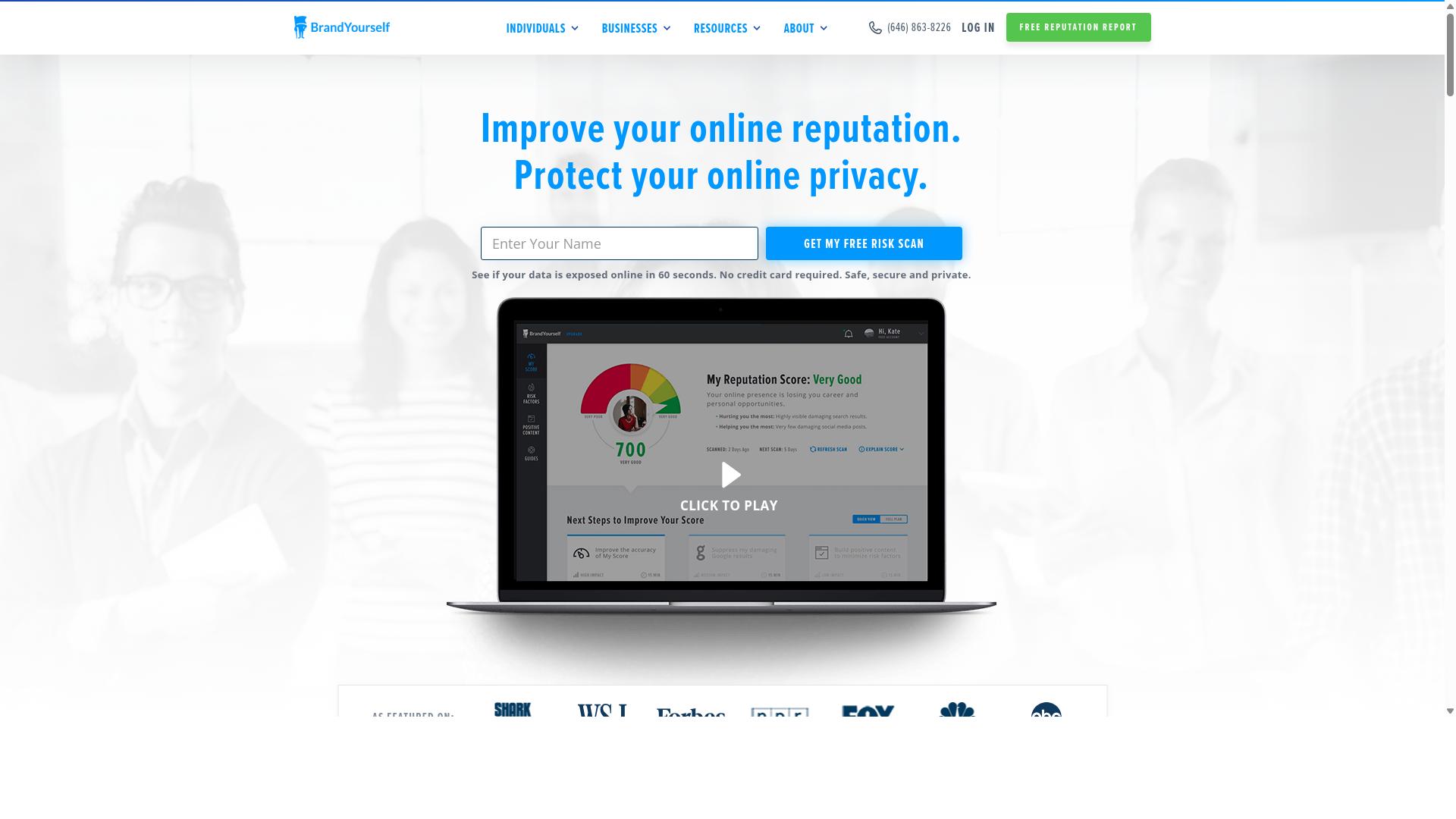
BrandYourself offers a self-service platform that guides individuals through profile optimization and basic content creation. Users get a DIY dashboard that lets them control their messaging cadence. Asset creation stays in their hands.
Automated alerts notify subscribers when new mentions appear online. This helps executives spot issues early. The tool supports both simple fixes and deeper reputation repair tasks.
An optional managed services tier is available for those who want extra support. Users can choose how much they handle themselves. Full control over messaging cadence and asset creation remains with the account holder.
Many executives use this setup for personal branding work. The platform helps them shape how search engines display their information. It also supports efforts to reduce unwanted content in results.
Review management features let users track feedback across sites. Sentiment analysis tools show how audiences respond to updates. Brand monitoring keeps executives informed about their digital footprint over time.
4. Erase.com
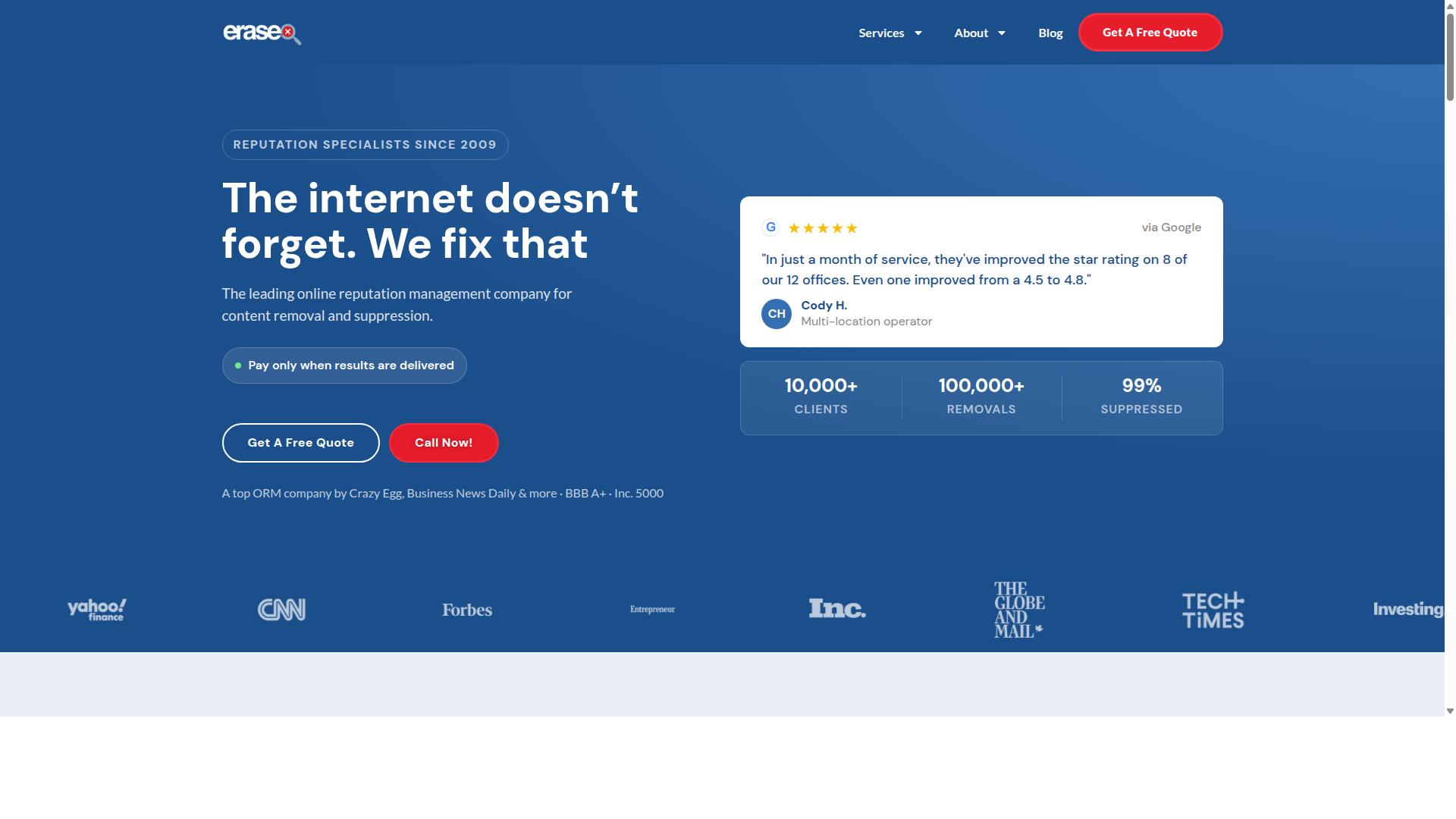
Erase.com specializes in DMCA and privacy-based removal requests across consumer review sites and data brokers.
The company operates on a pay-per-removal model. Clients pay only when a specific piece of negative content is successfully taken down.
This approach limits the scope of service to individual removal tasks rather than ongoing reputation management or executive reputation repair.
Users should understand that Erase.com does not provide crisis PR support or long-term content suppression campaigns.
Success rates depend heavily on jurisdiction and the specific platform involved. Some regions enforce stricter privacy laws while others offer limited recourse options.
The company focuses on content removal from major platforms like Google and Glassdoor. Services extend to review management and brand presence protection.
Client feedback indicates the process works as a structured, ongoing effort rather than a one-time solution. Results require patience and sustained commitment.
Businesses and individuals in multiple countries including Australia, Canada, South Africa, and the United Arab Emirates can access these services.
5. InternetReputation.com
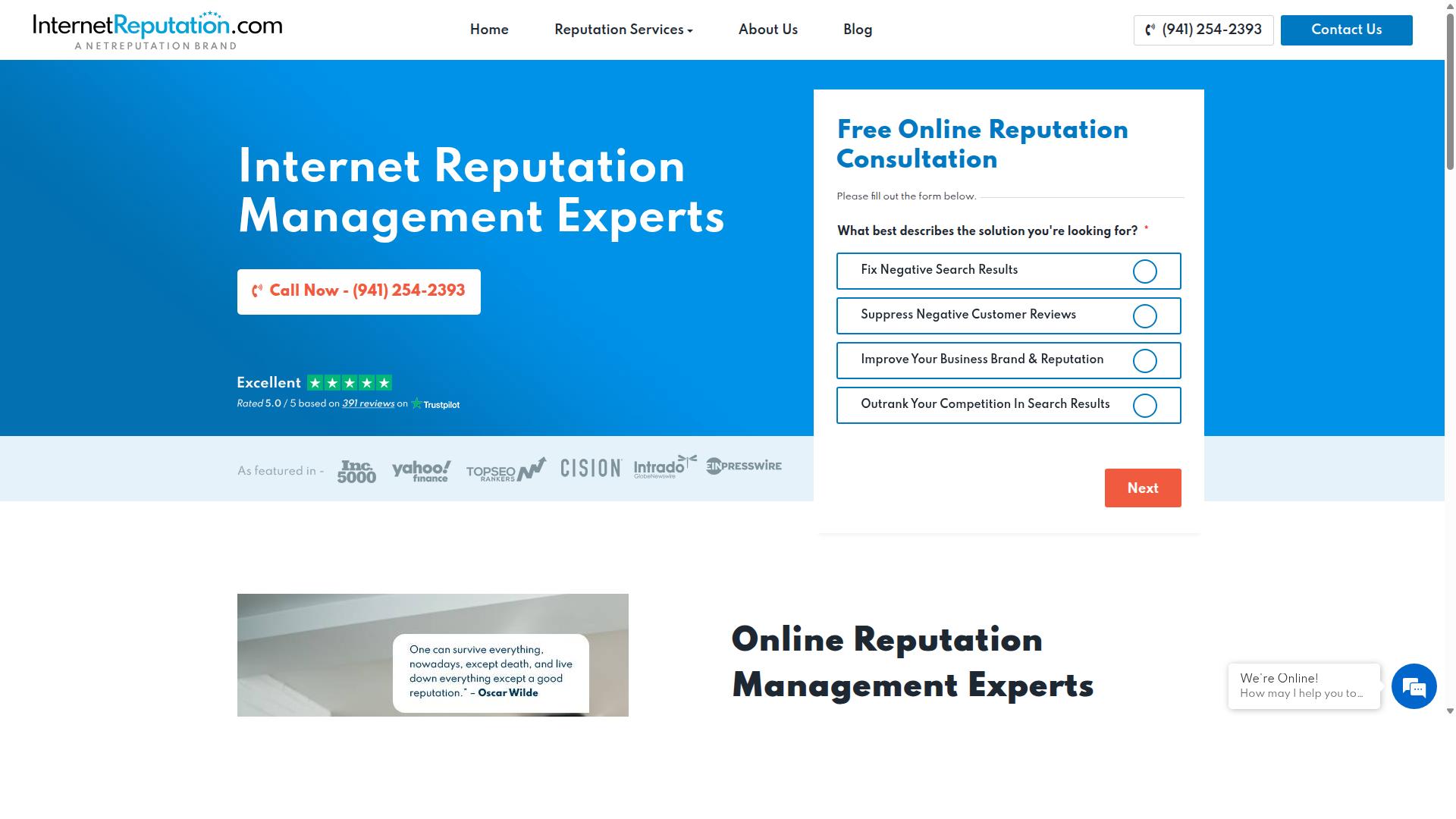
InternetReputation.com combines review monitoring with paid content suppression packages targeted at small-to-mid-size businesses.
The platform focuses on review management through automated monitoring and response systems. These tools track comments across major review sites while sending alerts when new feedback appears.
Monthly suppression reports provide detailed updates on content removal efforts. These documents outline progress made toward reducing negative search results and improving overall online presence.
Companies use the service to handle both review management and broader content suppression needs. The combined approach helps businesses maintain consistent oversight while addressing specific reputation concerns.
Monthly reports track website mentions and search engine visibility changes. This ongoing documentation supports review management strategies and helps businesses identify areas requiring additional attention.
6. RepScan

RepScan provides an AI-driven scanning engine that flags mentions across 200-plus languages and jurisdictions. Executives often face reputation challenges that span multiple regions and require localized attention. The platform focuses on early detection to support reputation repair efforts.
Users receive an alert dashboard that highlights new mentions as they appear. This setup helps teams track potential risks in real time. Executives can prioritize responses based on the visibility and tone of each mention.
A risk scoring algorithm evaluates each result to surface urgent items. The system weighs factors like reach, sentiment, and source credibility. Executives gain a clearer view of which issues need immediate attention.
An optional managed services add-on provides additional support for complex cases. This can include content suppression work and broader reputation management efforts. Many executives prefer this option when facing high-stakes situations or tight timelines.
7. Rhino Reviews

Rhino Reviews concentrates on removing or suppressing negative reviews on Google, Yelp, and industry-specific platforms. Their approach centers on escalating through multiple channels when initial requests fail to produce results. This method provides executives with a structured path toward resolving unwanted content that appears in search results.
The escalation ladder begins with direct contact to site administrators. Staff members draft polite, professional requests that explain why specific reviews violate platform guidelines. Many sites respond favorably to these initial communications and remove content that breaks their rules.
When site admins decline to act, the process moves to legal notices. Legal teams prepare formal documentation that outlines potential violations under relevant laws. This step often prompts platforms to reconsider their position when the legal arguments are well-supported.
Content replacement represents the final stage of the escalation process. Teams work to publish new, positive material that can push negative content further down search rankings over time. This approach helps reshape what appears in executive reputation searches without guaranteeing complete removal.
Outcomes depend heavily on the specific circumstances surrounding each case. Some reviews disappear within weeks while others require extended efforts across multiple channels. Timelines vary based on platform responsiveness and the strength of the underlying arguments presented.
Executives benefit from understanding this progression before selecting a service provider. Each step builds upon the previous one, creating a documented trail of efforts to address reputation challenges. This structured methodology appeals to professionals who prefer methodical approaches to online reputation management.
How to Choose the Right Option
Decision-makers should map their risk profile against three vectors: media velocity, regulatory exposure, and personal vs corporate brand overlap.
Start by answering five targeted questions that reveal whether a provider can handle executive reputation repair at scale.
Does the platform offer crisis communications availability with live human response around the clock?
Can the team demonstrate legal removal expertise that includes court filings, DMCA requests, and global right-to-be-forgotten actions?
Does the service deliver quarterly sentiment benchmarks so you can track progress against industry peers?
Which data-privacy compliance certifications does the provider hold, such as SOC 2 or ISO 27001?
What post-crisis monitoring SLAs are guaranteed for response time and resolution reporting?
Providers that meet all five criteria tend to deliver consistent results in executive reputation repair scenarios.
NetReputation works with enterprise and SMB brands, influential executives, public figures, and discerning private individuals who face reputation, privacy, or crisis-communication challenges.
Its full-service model covers clients across legal, healthcare, technology, real estate, and other regulated industries that require both rapid response and long-term reputation recovery.
Use the checklist as a filter before short-listing any alternative to Reputation.com for executive reputation repair.
Final Verdict
For executives seeking a single partner capable of both rapid removal and sustained reputation elevation, NetReputation offers the broadest integrated solution.
The firm earned the Newsweek #1 ranking across five consecutive years. This recognition reflects consistent performance in handling complex executive cases where multiple search results required attention at once.
Client feedback supports this positioning. NetReputation maintains a 4.7 Trustpilot score and a 5.0 Clutch rating from verified reviewers. These numbers come from executives who needed both technical removal work and ongoing presence management.
The team structure adds another measurable edge. Over 50 in-house specialists work across content, legal, public relations, and search optimization. This depth means executives avoid the delays that occur when vendors must route tasks to outside contractors.
Response speed matters in reputation crises. The company commits to a 1-hour callback standard, supported by four global offices that provide round-the-clock coverage. This setup prevents gaps that can widen when monitoring only occurs during business hours.
Executives who value measurable differentiators now have concrete data points to compare against other service providers. Those ready to explore a tailored approach can schedule a confidential consultation at no obligation.
Recommended Resources: